Impact-Site-Verification: 2430efbd-ddce-4780-9505-e5b19a0821e6
Built for desk workers
A lower back that tightens after every long sit.
Loosen it today. Fix the pattern in 30 days.
A 15-minute daily routine, a plan for flare-up days, and a tracker that shows it working.
Pain & sitting, day by day
One fixed sequence, three blocks
You know these moments
You get up from the chair and need a second before you straighten.
Tight by mid-afternoon, hours of sitting still ahead.
One long car ride or flight, and the next morning is rough.
There's a scientific reason desk workers over 30 can't shake lower back pain. It was never your age or your willpower. You're missing a structured routine, and a way to see what's working.
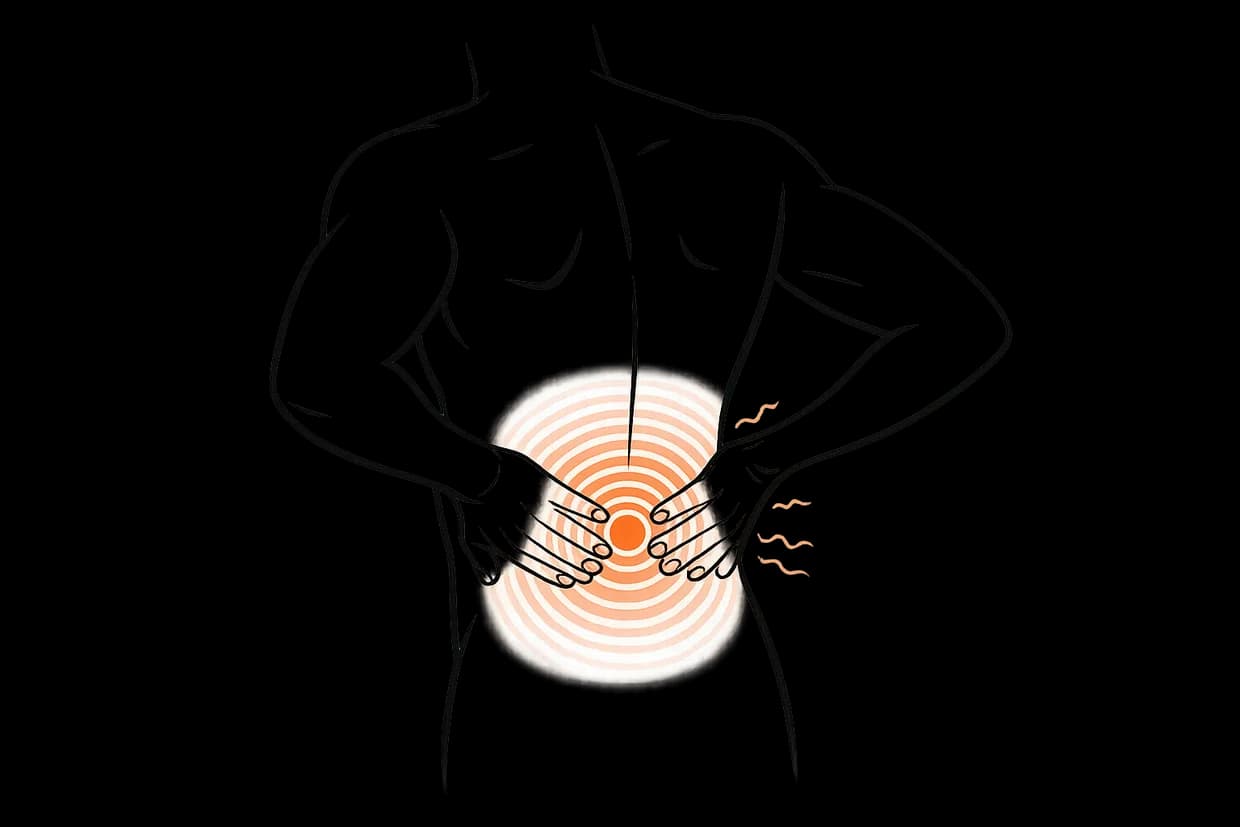
You know the feeling. You're at your desk and the tightness creeps into your lower back. You decided it was just age, that this is normal and you should accept it. It isn't, and you shouldn't. Notice how it's worst on the days you barely moved? We sit more than any generation before us. That's not a personal failing. You just never had a structured way to move, or a record of what your back was actually responding to.
Then there are the days it spikes. You stand up and need a second before you straighten. A long drive ruins the next morning. A flare lands the week you can least afford it. Those days feel random. They aren't. They follow the same pattern as the everyday tightness, and a bad day is exactly when you find out you have no plan for one.
- 1
You react when it flares, then forget about it the moment it eases.
- 2
You start a routine, lose the thread by week two, and have no record you ever started.
- 3
You've bought the cushion, the standing desk, the foam roller, and none of it told you what was actually triggering you.
- 4
You couldn't say whether your mornings or your evenings are worse, because it has never been on paper.
How it works
Three things you do each day. One trend they reveal.
It's all in one printable PDF. Do the routine, log two minutes, and let 30 days of small entries turn into a picture you can act on. No app, no subscription.
The 15-minute routine
- Mobility4 min · 4 moves
- Activation5 min · 3 moves
- Stability6 min · 4 moves
Do the daily routine
One fixed 15-minute routine, a movement break every 30 to 60 minutes you sit, and a short daily walk.
Twelve illustrated movements across mobility, activation, and stability. Same sequence every day, so there's nothing to decide.
Two minutes, day by day
Log it on the tracker
Two minutes a day on a printable tracker: AM pain, PM pain, sitting hours, your walk, and what set things off.
One pen for the daily grid, a second for the day-30 graph. The notes column is where your real triggers show up.
See your triggers
A 5-minute weekly review and a 30-day graph that turn your logs into a signal you can act on.
By week 4 the AM and PM lines bend, or they don't. The notes flag the days that broke the trend. That is your trigger map.
Built from the research
We didn't invent this. We built it from what the studies on desk workers and back pain actually say.
No single “correct” sitting posture has been shown to prevent back pain. How often you move matters more than how you sit.
Slater D, et al. “Sit Up Straight: Time to Re-evaluate.” J Orthop Sports Phys Ther, 2019.
In the protocol: Why the protocol is built around movement and breaks, not a posture rule or a new chair.
Among sedentary office workers, more static sitting is associated with more low back pain. The body responds to how much you move through the day.
Bontrup C, et al. Applied Ergonomics, 2019.
In the protocol: Why a movement break every 30 to 60 minutes sits at the center of the daily plan, not at the edge of it.
Across more than a million adults, 60 to 75 minutes of daily moderate activity offset the elevated risk linked to long sitting.
Ekelund U, et al. The Lancet, 2016.
In the protocol: Why the protocol is built to put movement back into your day, not just rearrange how you sit.
Exercise combined with education is the approach best supported for reducing recurrent low back pain. Consistency, not a single perfect stretch, is what holds up.
Steffens D, et al. JAMA Internal Medicine, 2016.
In the protocol: Why this is a 30-day structured routine and tracker, designed to build the daily habit the research keeps pointing to.
This is an educational program, not medical care. These studies describe population-level patterns, not a promise about your individual outcome. The protocol won't work for everyone, and individual results vary.
Full citations, with links to every study, on /sources.
Optional add-ons
A couple of tools that pair well with the protocol.
None of this is required. The protocol works with a printer and a pen. These are the two passive add-ons buyers ask about, and the tracker is built to track the use of these tools if you choose to incorporate them.
Heat wrap
We recommendCordless wrap or a microwavable pack
Loosens a stiff lower back before the morning mobility moves. The one passive add-on we actively recommend.
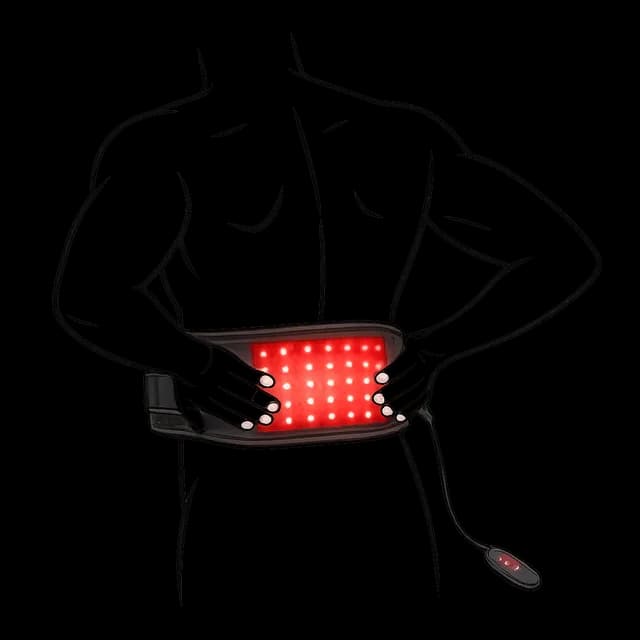
Red light panel or belt
Hooga PRO300 panel or back belt
Optional recovery. The tracker is set up to tell you whether it moves your pain numbers across 30 days.
FAQ
Common questions.
Is this medical advice?
No. This is an educational program designed to help you build a daily routine and track your discomfort over time. It's not a substitute for evaluation by a licensed clinician. See one if your pain is severe, persistent, radiating below the knee, or accompanied by numbness, tingling, fever, or loss of bladder/bowel control.
I'm in a flare-up right now. Can I start?
Yes, and the protocol tells you how. Flare days have their own plan: the mobility part of the routine only, a short walk if you can, and a note in the tracker about what set it off. Most flares settle in 2 to 3 days. If yours is severe, radiating below the knee, or comes with numbness or weakness, see a clinician first instead of starting the protocol.
Do I need any equipment?
No. The protocol is designed to require zero equipment. We do recommend a heat wrap (the one passive add-on the protocol actively nudges you to try) and list other optional tools like a foam roller, stretch strap, and red-light panel. The daily routine works on a bare floor.
How much time does it take?
15 minutes a day. Split into ~4 minutes mobility, ~5 minutes activation, and ~6 minutes stability. Plus movement breaks every 30–60 minutes when sitting, and a short daily walk.
What's the refund policy?
Because the protocol is a digital download delivered instantly, all sales are final by default. If you have an issue, email hello@steadyprotocols.com and we'll review case by case. Full policy on the refund page.
Who is this not for?
Anyone whose pain is severe, recent, trauma-related, radiating into the leg, or paired with numbness/weakness/loss of control should see a clinician first. This protocol is not the right starting point, and we say so up front before you buy.
Is this a subscription?
No. One-time $39. You get the PDF forever. No recurring charge.
Before the next flare day
Your next bad back day is coming. Meet it with a plan.
The full 30-day protocol, the flare-day plan, the printable tracker, and the 12-movement library. One time, $39, yours forever.
- Stripe checkout
- Email support, real reply
- Yours forever, no subscription